
The Wnt Pathway:
A fundamental pathway for tissue repair in ophthalmology
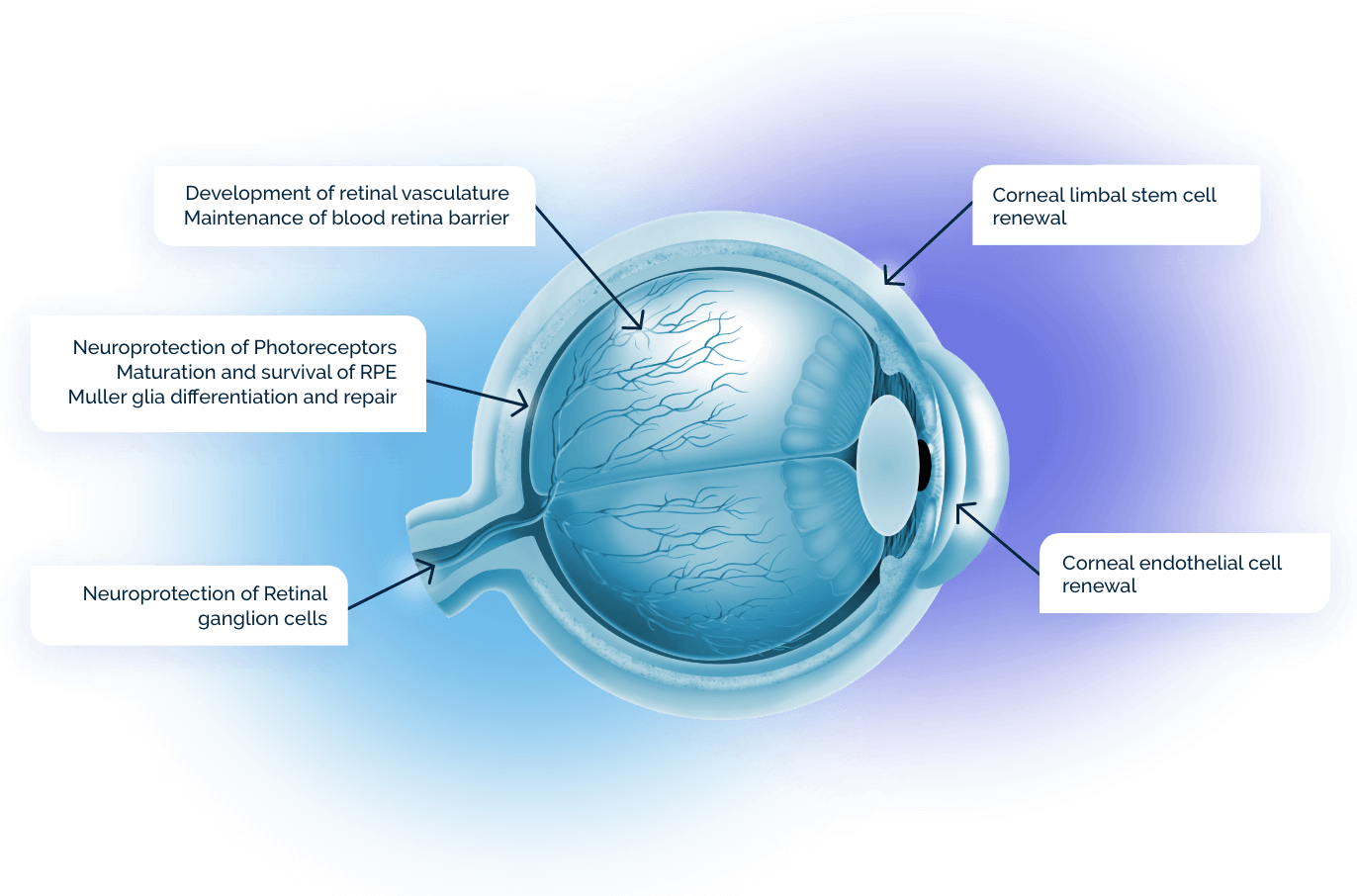
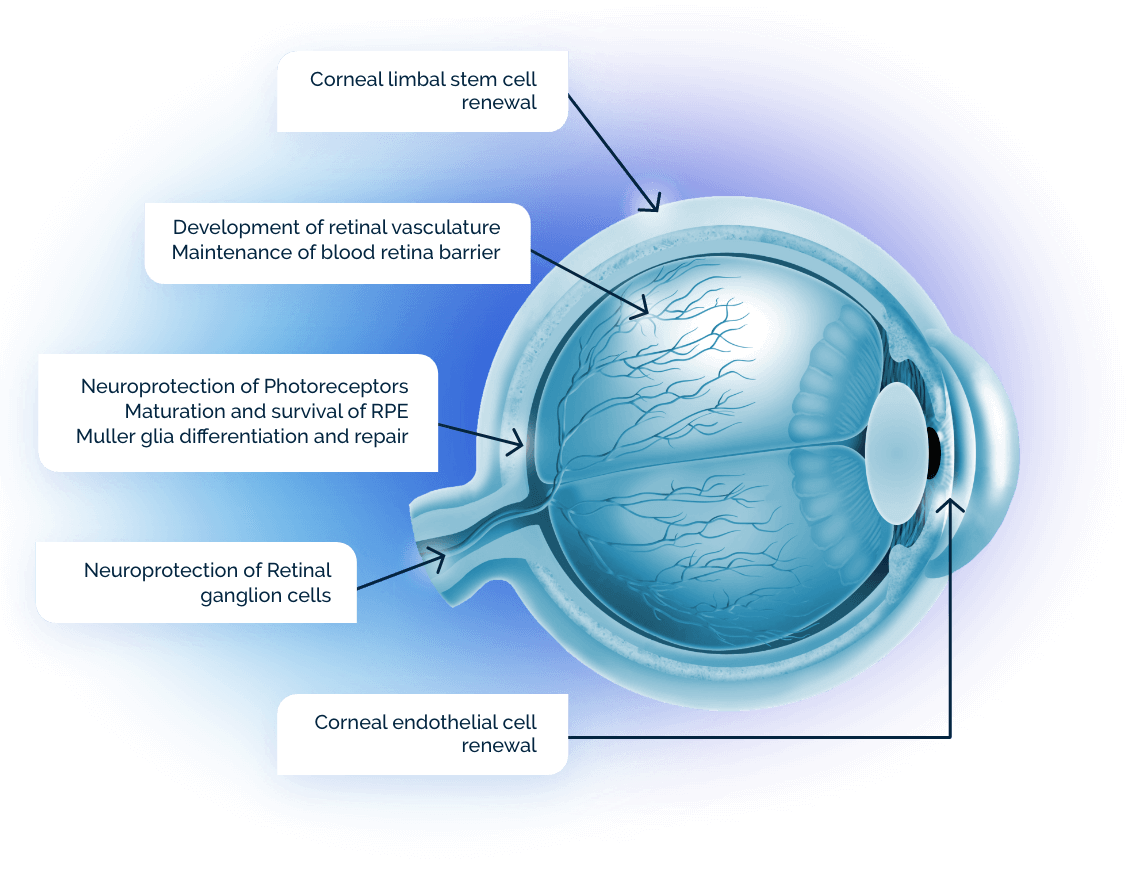
Wnt signaling plays a central role in tissue repair and cellular renewal throughout the eye. It is essential for the development and maintenance of retinal blood vessels and the integrity of the blood-retina barrier. Beyond the vasculature, the Wnt pathway is active in the retina supporting the survival and protection of photoreceptors and the retinal pigment epithelium. It is also active in corneal epithelial and endothelial cells where it promotes regeneration and barrier function. Together, these functions underscore the broad therapeutic potential of modulating Wnt signaling across multiple ophthalmic diseases.
Targeting Wnt:
Significant Potential in Ophthalmology
Wnt Signaling:
A key regulator of vascular integrity and homeostasis
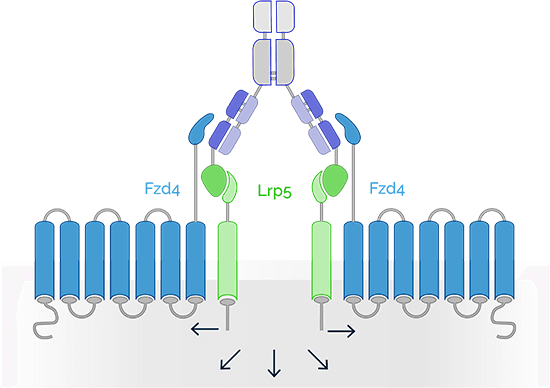
The Wnt signaling pathway plays a central role in the development and maintenance of healthy retinal vessels. In the eye, the Wnt ligand Norrin binds to cell surface receptors Frizzled-4 (FZD4) and LRP5, activating genetic programs that maintain blood–retina barrier integrity to prevent leakage and promote vascular repair and perfusion.
The importance of this pathway is highlighted by human genetics—mutations in Wnt signaling genes such as Norrin, FZD4, or LRP5 lead to diseases like Norrie disease and familial exudative vitreoretinopathy (FEVR), marked by abnormal retinal vascular development and ischemia. Extensive preclinical research further supports that activating Wnt signaling can restore vascular integrity, restore leakage, and reestablish perfusion in models of retinal vascular disease. (Clevers, H., Loh, K.M., Nusse, R., Science, 2014)1,2,3
Intact BRB / No leakage
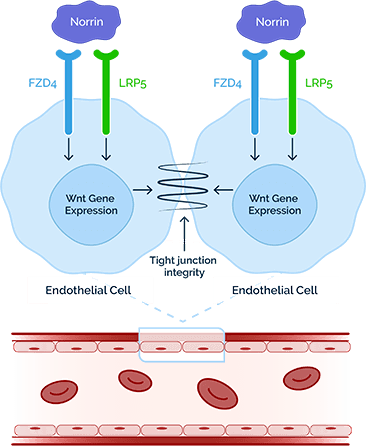
Retinal vasculature with normal blood–retinal barrier (BRB)
SWAP Antibody
Restore blood–retinal barrier integrity
Promote vascular repair and reperfusion
Our Approach
The Wnt pathway has long been considered undruggable, as its natural ligands are lipid modified, unstable, and prone to nonspecific interactions. At Surrozen, we have turned this challenge into an opportunity through fundamental biological insight and advanced antibody engineering. Our proprietary Surrozen Wnt signal activating proteins (SWAPs) are multivalent antibodies that potently and selectively activate Wnt signaling in ocular tissues, unlocking a powerful biology once thought inaccessible to therapeutic intervention.
Building on this platform, we have evolved our technology to combine Wnt pathway activation with modulation of other key drivers of ophthalmic disease, enabling the development of best-in-disease therapies with the potential to preserve and restore sight.
Focus Areas
Diabetic macular edema
- Microvascular complication of diabetes resulting in fluid leakage in the macula and is one of the leading causes of sight loss in the working-age population
- Affects approximately 1.4 million people in the United States, with prevalence increasing alongside rising diabetes rates4,5
- Current needs include more durable and effective treatments for improved visual function and anatomic control


Wet age-related macular degeneration
- One of the leading causes of vision loss in the elderly population
- Affects approximately 1.3 million people in the United States, with numbers expected to increase as the population ages6,7
- Significant unmet need for patients who respond inadequately to current anti-VEGF therapies or require frequent injections that impact quality of life
- https://www.cell.com/iscience/fulltext/S2589-0042(24)01160-X
- https://www.nature.com/articles/s41467-023-37689-1#citeas
- https://pubmed.ncbi.nlm.nih.gov/36432666/
- https://jamanetwork.com/journals/jamaophthalmology/fullarticle/1895297
- https://gis.cdc.gov/grasp/diabetes/diabetesatlas-statsreport.html
- https://www.cdc.gov/vision-health-data/prevalence-estimates/amd-prevalence.html
- https://pmc.ncbi.nlm.nih.gov/articles/PMC11695844/